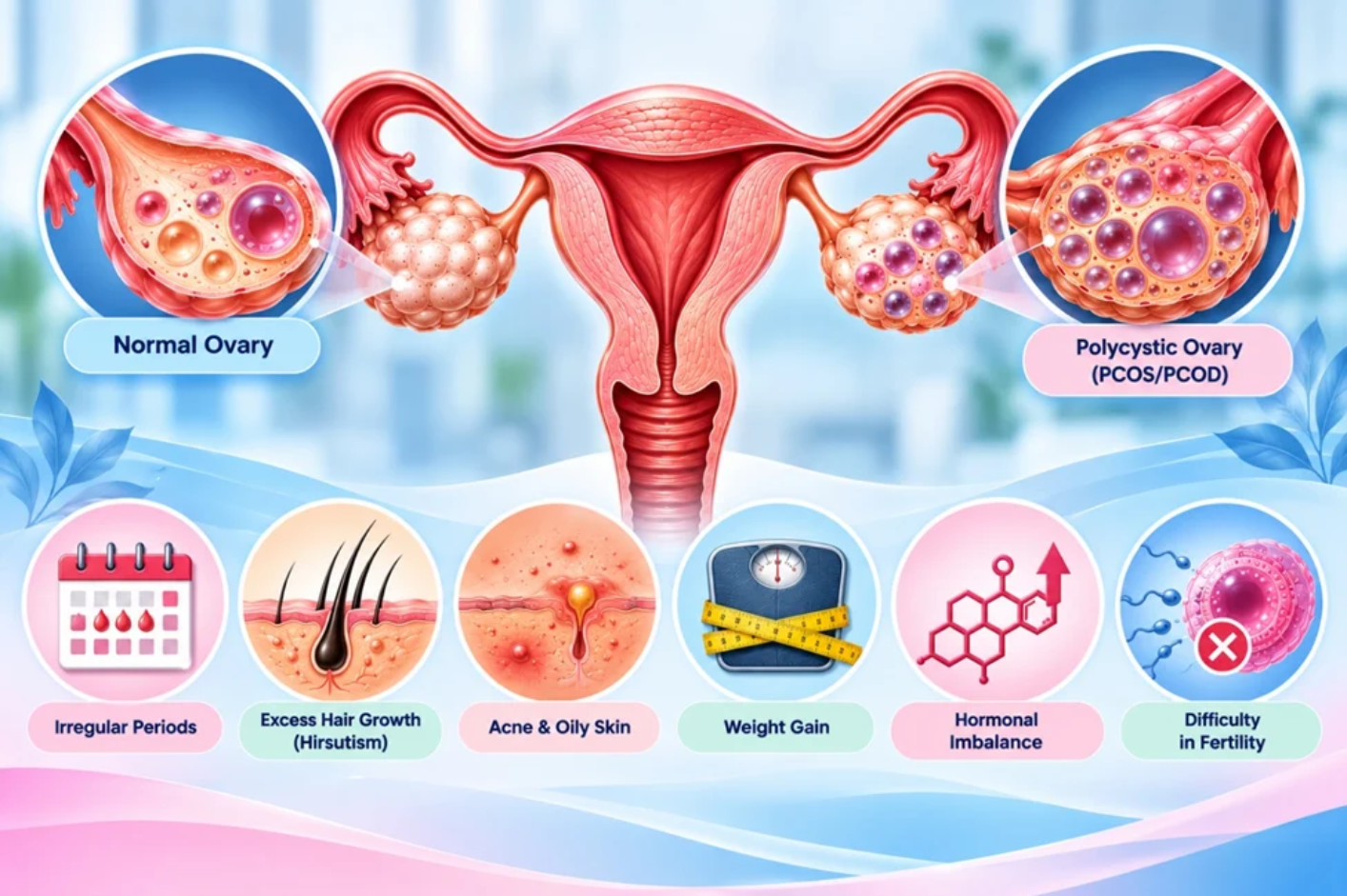
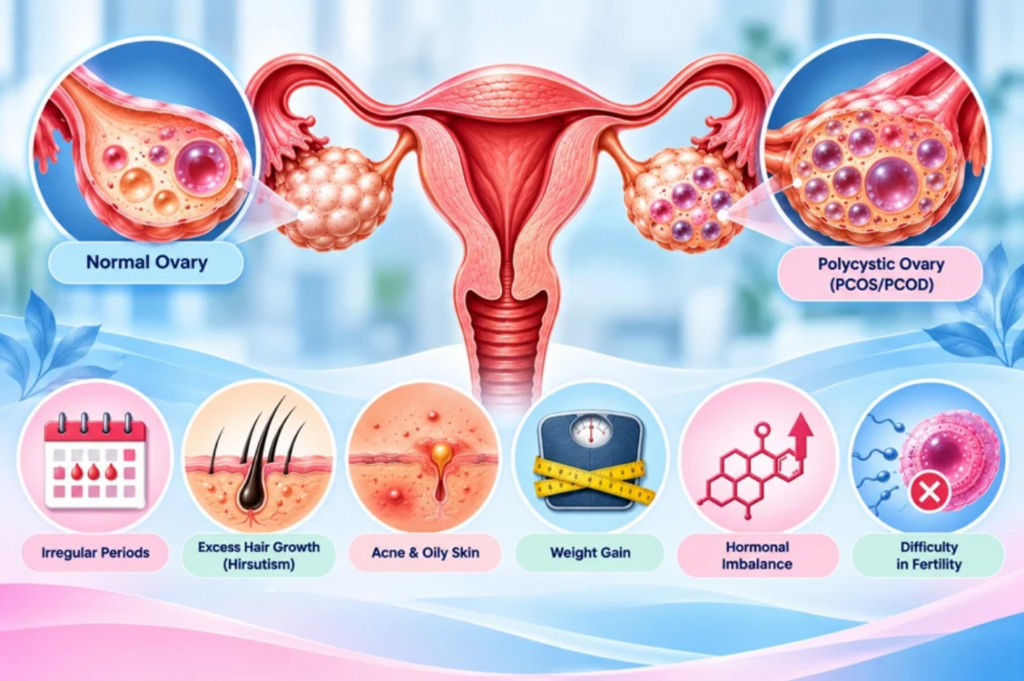
Polycystic Ovary Syndrome (PCOS), commonly referred to as PCOD, is a common hormonal and metabolic condition that affects women during their reproductive years. It can influence menstrual health, ovulation, fertility, skin, hair growth, and metabolism.
Understanding the symptoms, potential complications, and available treatment options can help women take informed steps toward better health.
1. What Is PCOS/PCOD?
Polycystic Ovary Syndrome (PCOS) is a hormonal and metabolic condition associated with hormonal imbalance, irregular menstrual cycles, problems with ovulation, and increased levels of androgens (hormones such as testosterone).
PCOS may also be associated with insulin resistance, weight changes, acne, oily skin, and excess hair growth. Symptoms vary from person to person, and not every woman with PCOS experiences the same signs.
2. Why Is PCOS a Serious Health Issue?
PCOS is more than an irregular-period problem. If left unmanaged, it may affect fertility, menstrual health, metabolic health, and overall well-being.
Women with PCOS may have an increased risk of developing:
- Type 2 diabetes due to insulin resistance.
- High blood pressure and abnormal cholesterol levels.
- Fertility difficulties related to irregular ovulation.
- Endometrial complications associated with prolonged periods without menstruation.
Early diagnosis and appropriate management can help control symptoms and reduce long-term health risks.
3. Precautions for PCOS/PCOD
PCOS cannot always be prevented, but healthy lifestyle habits can help manage symptoms and improve overall health.
Important measures include:
- Maintain a balanced diet: Include vegetables, fruits, whole grains, lean proteins, and healthy fats.
- Exercise regularly: Aim for consistent physical activity suited to your health and fitness level.
- Maintain a healthy weight: If appropriate, gradual weight management may improve metabolic health and menstrual regularity.
- Get adequate sleep: Maintain a consistent sleep schedule.
- Manage stress: Consider relaxation techniques, yoga, meditation, or other activities that support emotional well-being.
- Follow medical advice: Take prescribed medications and attend regular follow-up appointments.
Lifestyle changes can benefit women with PCOS regardless of their body weight.
4. Signs and Symptoms of PCOS/PCOD
PCOS symptoms can vary widely. Common signs and symptoms include:
- Irregular, infrequent, or missed periods.
- Excessive facial or body hair growth.
- Acne and oily skin.
- Weight gain or difficulty losing weight.
- Thinning hair or hair loss from the scalp.
- Difficulty becoming pregnant due to irregular ovulation.
Some women experience only a few symptoms, while others may experience several. Having one or more of these symptoms does not automatically mean that a woman has PCOS.
5. Complications of PCOS/PCOD
PCOS may increase the risk of several health complications, including:
- Infertility: Irregular ovulation may make conception more difficult.
- Insulin resistance and type 2 diabetes: The body’s ability to regulate blood sugar may be affected.
- High blood pressure and abnormal cholesterol: These may contribute to long-term cardiovascular risk.
- Endometrial hyperplasia: Prolonged periods without menstruation can increase the risk of abnormal thickening of the uterine lining.
- Emotional well-being concerns: Some women may experience anxiety, depression, or concerns related to body image and fertility.
Regular medical assessment can help identify and manage these risks.
6. How Is PCOS/PCOD Diagnosed?
There is no single test that confirms PCOS. A healthcare professional evaluates the individual’s symptoms, menstrual history, medical history, and examination findings.
Depending on the clinical situation, the assessment may include:
- Medical history and physical examination: To evaluate menstrual irregularities, acne, excess hair growth, and other symptoms.
- Blood tests: To assess hormone levels and rule out other conditions.
- Blood sugar and cholesterol testing: To evaluate metabolic health.
- Pelvic ultrasound: When indicated, to assess the ovaries and reproductive organs.
Other conditions that can cause similar symptoms may need to be ruled out. An ultrasound is not always necessary to diagnose PCOS, particularly when other diagnostic criteria are clearly met.
Consult a qualified healthcare professional for an accurate diagnosis and an individualized treatment plan.
7. Management and Treatment of PCOS/PCOD
PCOS is a long-term condition, but its symptoms and associated health risks can often be effectively managed. Treatment depends on the woman’s symptoms, overall health, and reproductive goals.
Management options may include:
- Lifestyle modifications: A balanced diet, regular exercise, adequate sleep, and sustainable health habits.
- Medicines to regulate periods: Prescribed hormonal treatments may help regulate menstrual cycles and protect the uterine lining.
- Treatment for acne and excess hair growth: Specific medications may be recommended based on individual needs.
- Metabolic management: Treatment may be advised for insulin resistance, elevated blood sugar, or other metabolic concerns.
- Fertility treatment: Women trying to conceive may benefit from treatments that support ovulation.
PCOS treatment should always be individualized. Do not start or stop medications without consulting a healthcare professional.
8. How MAI HEALTH Helps in PCOS Management
MAI HEALTH supports connected and continuous healthcare by helping patients and healthcare professionals manage important aspects of long-term care.
The platform can support:
- Digital health records: Keep important health information organized and accessible.
- Appointment management: Help patients schedule consultations and follow-up visits.
- Prescription management: Access digital prescriptions and medication information.
- Clinical reports: Keep relevant medical reports and records together.
- Secure communication: Support communication between patients and healthcare professionals.
For women managing PCOS, these features can help organize health information, support regular follow-ups, and improve continuity of care.
MAI HEALTH complements professional medical care and does not replace consultation, diagnosis, or treatment by a qualified healthcare professional.
FIND DOCTORS https://providers.mai.health
GO TO MAI HEALTH PORTAL https://mai.health