
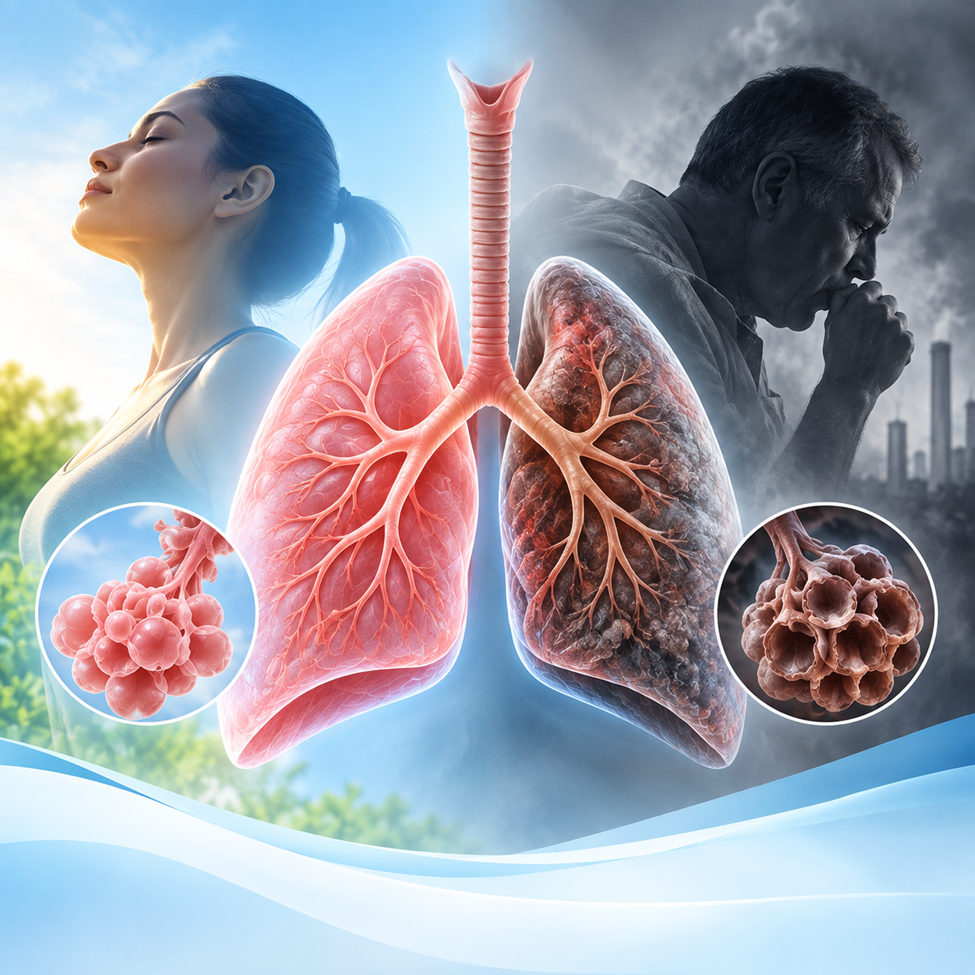
What Is COPD?
Chronic Obstructive Pulmonary Disease (COPD) is a long-term lung condition that makes breathing difficult. The condition mainly includes chronic bronchitis and emphysema.
Smoking is a major risk factor for COPD. However, long-term exposure to air pollution, dust, smoke, and chemical fumes can also increase the risk.
Why Is COPD a Serious Health Issue?
COPD can get worse over time. As a result, it may affect breathing, physical activity, and overall quality of life.
Without proper management, symptoms can become more severe. Some people may also experience frequent flare-ups or respiratory infections. In more serious cases, hospitalization may be required.
COPD Precautions
Taking certain precautions may help reduce symptoms and lower the risk of flare-ups:
- Avoid smoking and secondhand smoke.
- Limit exposure to air pollution, dust, smoke, and chemical fumes.
- Take prescribed medicines as directed.
- Use inhalers correctly and as prescribed.
- Stay physically active based on advice from a healthcare professional.
- Attend regular medical checkups.
These steps can play an important role in managing COPD and maintaining respiratory health.
Signs and Symptoms of COPD
COPD symptoms can vary from person to person. Common signs and symptoms include:
- Persistent cough
- Mucus or phlegm
- Shortness of breath
- Wheezing
- Chest tightness
- Tiredness
- Difficulty performing physical activities
At first, symptoms may be mild. However, they can become more noticeable as COPD progresses.
Complications of COPD
COPD may increase the risk of respiratory infections and flare-ups. In severe cases, it can also lead to low oxygen levels and reduced physical capacity.
In addition, COPD may be associated with other health problems, including cardiovascular complications. Regular medical care can help identify and manage these concerns.
How Is COPD Diagnosed?
A healthcare professional may consider your symptoms, medical history, and risk factors when evaluating COPD. Lung function testing is also an important part of diagnosis.
Spirometry is a key test used to measure airflow and help confirm COPD. In some cases, additional tests may be needed. These can include chest imaging and blood oxygen-level assessments.
How Is COPD Managed?
There is currently no cure for COPD. However, appropriate treatment and ongoing care can help control symptoms, reduce flare-ups, and support quality of life.
COPD management may include:
- Quitting smoking
- Using prescribed inhalers and medicines
- Staying physically active when medically appropriate
- Participating in pulmonary rehabilitation
- Receiving recommended vaccinations
- Using oxygen therapy when medically necessary
- Attending regular medical follow-ups
Because COPD affects people differently, treatment should be based on individual needs and guidance from a qualified healthcare professional.
How MAI HEALTH Supports COPD Management
Managing a long-term condition often involves appointments, medicines, test results, and communication with healthcare professionals.
MAI HEALTH helps organize important health information in one connected platform. Depending on the services being used, the platform can support:
- Digital health records
- Appointment management
- Prescriptions
- Medication information
- Clinical reports
- Secure communication
Having relevant health information organized and accessible can support ongoing COPD care and communication between patients and healthcare professionals.
When Should You Seek Medical Advice?
Talk with a qualified healthcare professional if you have a persistent cough, breathlessness, wheezing, or frequent respiratory infections. Early evaluation can help determine the cause of your symptoms and whether further testing is needed.
Seek urgent medical attention if you experience severe or rapidly worsening breathing difficulty, blue or gray lips or fingertips, confusion, or other signs of a medical emergency.
This article provides general health information only. It is not a substitute for professional medical advice, diagnosis, or treatment.